ESPAÑOL (ENGLISH UNDERNEATH)
Hoy estoy nostálgica y echo de menos los días de vida universitaria y las largas noches de los jueves en que se hacían cenas en mi casa. Estos chupitos eran uno de los puntos estrellas de la cena. Se trata de unos chupitos con sabor a piruleta (chupito muy muy dulce) con sorpresa (un caramelo blando de cereza que sabe igual que el chupito).
Ingredientes:
-licor Amaretto (yo uso el de marca original en Italia porque sabe mejor)
-jarabe de lima
-jarabe de granadina
-caramelos blandos sabor cereza yo he usado éstos:
PASOS
En el fondo del vaso dejamos caer un caramelo. Echamos el Amaretto y la lima a partes iguales. Al final añadimos un chorrito de granadina.
y.. ¡listo!
Seguro que os sorprende :)
ENGLISH
Today I feel quite nostalgic. I miss university life and all those long Thursday nights when I had many dinners at home with my friends. The following cherry-flavoured shots are very soft and sweet and contain a little surprise inside: a soft cherry candy that tastes exactly the same as the shot.
Ingredients:
-Amaretto liqueur (I use the Italian original Brand because it's just better)
-Lime cocktail mixer
-Grenadine cocktail mixer
-Soft cherry-flavoured Candies. I used these:
STEPS
Put a candy at the bottom of the glass. Add the Amaretto and the Lime in the same proportion and add a stream of Grenadine.
Calle de San Marcial, 48 20006 Donostia-San Sebastián, Guipúzcoa, Guipúzcoa 943 42 14 23
ESPAÑOL (ENGLISH
UNDERNEATH)
Este bar-restaurante, ubicado muy cerca del enclave
privilegiado de la Concha, es uno de mis favoritos. Siempre que voy a San
Sebastián, como al menos una vez allí. Es un local renovado hace no mucho
tiempo, aunque sigue conservando el pavimentado original de la calle como suelo para el restaurante. Su dueño
lo defiende en una entrevista del diario
vasco como “una prolongación más de
las calles de San Sebastián, porque en esta ciudad se va de pintxos de pie y
por las calles”. Me gusta su ambiente, puedes encontrar muchos lugareños
que lo frecuentan y la gente es muy maja, así como el servicio. En resumen, en
el restaurante encontraréis una atmosfera muy agradable y relajada. El bar,
quizá es un poco bullicioso al igual que el resto de buenas barras de pintxos
en Donosti, pero de gran calidad.
El establecimiento La Espiga está formado por dos plantas: la primera
es la del bar (con una extensa y vistosa barra de pintxos) y en la inferior
está el restaurante. A fuera, en época estival, tienen unas mesas. Si bien, he
probado varios pintxos (después de haber catado los del Politena en Getaria, en
ningún otro lugar me parecen igual) y están buenos; aunque quizá mi recomendación
está más dirigida hacia el restaurante, el cual es-ex ce-len-te. Es un lugar
perfecto para disfrutar de una buena compañía con un vino (mejor un Txacolí) y
una comida de calidad (muy buena relación calidad-precio en Donosti). Yo recomiendo
que cuando uno viaja, escoja siempre productos de la zona. Pues, serán sin
duda, la mejor apuesta. También es un buen consejo reservar mesa con
antelación, sobre todo en verano.
He probado varios platos de la carta. Recomiendo
especialmente:
·Rape a la donostiarra (con panaderas y refrito
de ajos).
·Cogote de merluza hecho de la misma forma.
·Ensalada de vieiras con fruta.
·Anchoas de Sanlúcar (con tomate y huevo
rallado). También las había de Getaria preparadas de forma distinta y tenían
muy buena pinta pero no las he probado todavía.
·Sopa de marisco con dados de rape.
·Como pintxo: el de pimiento del piquillo.
·Ensaladilla rusa. Bruno Oteiza, cocinero del
grupo Antena 3 Televisión la considera la “mejor de San Sebastián”.
A pesar de estar bueno también, quizá no me han llamado
tanto la atención:
·Ajoarriero (muy bueno pero no se puede comparar
con otros platos que son sublimes).
·Arroz con almejas (puntuación: bien. Pero me
falta más. Hecho de menos algún sabor a marisco en el arroz, el cual era un
poco insulso. Las almejas muy buenas).
·Selección de pintxos fritos (pues eran buenos,
pero no soy muy de fritanga) quizá es más una cuestión personal.
A parte de la carta, tienen unos platos del día. Os
recomiendo que preguntéis por ellos y que os dejéis aconsejar según lo que
tengan en el día, porque las veces que mejor he comido allí han sido en estas
circunstancias. Con lo que se refiere a los postres, no puedo opinar. Las raciones
de los platos son contundentes y nunca he podido llegar con hambre para probar ninguno. Ya tengo objetivo nuevo: ¡la
próxima vez, haré rinconcito para probarlos!
ENGLISH
This
bar-restaurant, located really close to the privileged beach settlement of La
Concha, is one of my favourites. Whenever I go to San Sebastián, I eat once (at
least) there. It is a recently renewed establishment although it preserves the
original floor pavement which is the same as the street one. Its owner
justifies the floor in an interview of El
Diario Vasco newspaper as “a
prolongation of the streets of San Sebastián, because in this city people eat
pintxos in the street standing”. I like La Espiga’s atmosphere, you can find many locals who frequent it
and people is really kind there, as well as the staff. Summing up, in the restaurant
you will find a very pleasant and relaxing atmosphere. On the other hand, the
bar is a little more lively –as well as the other excellent pintxos bars in
Donosti- in spite of being of high-quality, of course.
The establishment
is formed by two floors: in the first one, you will find the bar (with a quite
extensive and varied pintxos bar), whereas in the lower one, there is the
restaurant. Outside, during summertime, there are some tables. To tell you the
truth, I’ve tasted many pintxos there -and they are good- (although none of
them was comparable to any of the pintxos in Politenain Getaria, Guipúzcoa. Indeed,
neither here nor anywhere else). My recommendation of this place is directly
addressed to the restaurant, which is ex-cel-lent!
It is a perfect place to enjoy of a high-quality well-made meal with a good company
and a good wine (and better if it is a Txacolí –a variety of fresh white wine
which is exclusively produced in the area that combines perfectly with pintxos,
pasta, salads and fish-). Eating here is a pretty good value for money in
comparison to other restaurants in the city.
If you
visit the area -eating here or at any other restaurant-, I suggest eating
always local products, because they’ll be the best option. I also recommend you
to reserve a table here in advance –especially during summer-.
I have
tasted many dishes of the menu and I strongly recommend:
·Monkfish at the local style (“a la Donostiarra”; with potatoes a la Boulangère and a fried
garlic sauce with cayenne pepper, parsley -and obviously soft garlic-). Absolutely
excellent!
·Nape of hake at Donostiarra Style (prepared in the same way as the monkfish).
·Scallop
& fruit salad.
·Sanlúcar anchovies with grated
tomato and egg
(Sanlúcar is in Andalucía, but the regional Getaria anchovies seemed good as
well –they are prepared differently-
although I haven’t still tasted them).
·Fish and shellfish soup (more than a soup was a shellfish
cream with monkfish dices), which was delicious!
·My
pintxo recommendation: filled and batter
piquillo peppers.
·Russian
salad. Bruno Oteiza (a Basque cook in Antena 3 Spanish Television) considers La Espiga’s Russian salad, the best in
San Sebastián.
In spite of
being good as well, maybe the following dishes didn’t meet my expectations:
·Ajoarriero
(quite a good dish but it is not comparable to other dishes, which are sublime.
Ajoarriero is a traditional Basque
dish composed by a mix of minced cod with ratatouille).
·Rice with clams (just good. But I expected more. The
rice was quite flavourless. Clams were excellent).
·Selection of fried pintxos (they were good. Maybe the problem
here is mine because I don’t like much fried food).
Apart from
the menu, they have daily dishes. I suggest you to ask for them and let to be
suggested by the staff depending on what they have fresh in that particular
day. I can assure you that the best meals I’ve had there, were under these premises!
In what refers to desserts, I can’t opine. When you order, take into account
that dish rations are complete. Next time I go there, I want to taste them, I figure
out they may be excellent!
Es un aperitivo muy fácil y rápido. Lo podéis usar tanto en
fiestas, como pequeño aperitivo los fines de semana o hasta poner dos o tres
unidades en una ensalada.
RECETA
Raciones: 12 unidades
Tiempo: 10 minutos
Dificultad: muy fácil
INGREDIENTES
·Un paquete de seis mini rodajas de queso de
cabra (me gusta más este queso que el de rulo que venden en la charcutería
porque es más suave, es menos ácido)
·12 mini tostadas
·Mermelada de albaricoque
·Vinagre balsámico de Módena
·12 palillos cortos
PASOS
En un plato extendemos las 12 mini tostadas. Con una cuchara
las untamos de mermelada de albaricoque. Cortamos cada rodaja de queso por la
mitad. Colocamos cada mitad encima de una tostada tal y como se ve en la
fotografía. Con la ayuda de un soplete de cocina, gratinamos el queso. Echamos vinagre
balsámico por encima y clavamos un palillo a cada unidad.
Hoy, receta fugaz. ¡Espero que os guste!
ENGLISH
It is an easy
and quick appetizer. You can prepare it for parties, cocktails, as a small oeurs d’oeuvres at weekends or even in
salads (two or three units per person).
RECETA
Servings:
12 units
Time: 10
minutes
Difficulty:
very easy
INGREDIENTS
·6
mini slices of goat cheese (I use them because I think that this one tastes
less sour than the normal goat cheese)
·12
mini toasts
·Apricot
jam
·Modena
balsamic vinegar
·12
tooth sticks
STEPS
Put 12 mini toasts in a plate. Spread some apricot jam over them with a spoon.
Cut each slice of cheese into two. Place each half-slice on each toast as seen
in the picture. With the help of a kitchen blowtorch, gratiné the cheese. Pour some
drops of balsamic vinegar over the cheese and poke a tooth stick at each unit.
En primer lugar quiero decir que es para mí un honor inaugurar la sección de
Rincón Gastro con este restaurante.
¡Se tiene bien merecida la recomendación! Comienzo esta sección ahora que ya hemos superado las 500 visitas. ¡Gracias a todos!
Unos de los mayores placeres gastronómicos en el panorama de la cocina
española son los pintxos y las tapas y, para comer buenos pintxos, hay que ir
al País Vasco. En ningún otro lugar saben igual. Guipúzcoa, concretamente San
Sebastián (o Donosti) y sus alrededores, es mi rincón favorito en España.
Y, por supuesto, si vistáis esa zona, no os podéis perder un pueblecito que
está a escasos 15-20 minutos de Donosti en coche llamado Getaria.
Getaria es un típico pueblo de pescadores de la cornisa cantábrica. Es muy
turístico (cada vez más) pero a diferencia de otros lugares, conserva su
atractivo natural. Los dos personajes más célebres de Getaria han sido el navegante
que dio la primera vuelta al mundo Juan
Sebastián Elcano y el modisto Cristóbal
Balenciaga.
A parte de su historia, del entorno, de su casco antiguo, de sus tres playas
y de sus vistas, el plato fuerte de Getaria (y nunca mejor dicho) es la
gastronomía. Por un lado, es un pueblo con denominación de origen del Txakolí
(un delicioso y fresco vino blanco para acompañar cualquier pintxo, pescado,
ensalada o pasta). Por el otro, tiene un puerto de gran tradición pesquera, por
lo que todos los restaurantes son abastecidos con una indiscutible excelente
materia prima. Cualquiera de los restaurantes de Getaria, en realidad, es una
buena recomendación (muchos de ellos asan pescado en unas parrillas en forma de
pez. Cosa que, cuanto menos, curioso es. Además, es sabido que a un buen
pescado fresco no le hace falta demasiados arreglos).
Getaria es un buen destino para ir a comer. Sin embargo, desde mi punto de
vista, no se encuentran mejores pintxos ni en Getaria ni en todo San Sebastián
que en la Taberna Politena. Me
parece un lugar muy auténtico y de calidad.
Este bullicioso bar-restaurante situado en la calle principal de Getaria es
uno de mis restaurantes favoritos. Desde que descubrí la ciudad de San
Sebastián, la visito una vez al año y siempre intento hacer cosas nuevas cuando
voy, pero lo que siempre repito es visitar Getaria y la Taberna Politena. De las
veces que he ido a Getaria, la mejor propuesta es la ruta gastronómica que os
dejo a continuación:
En primer
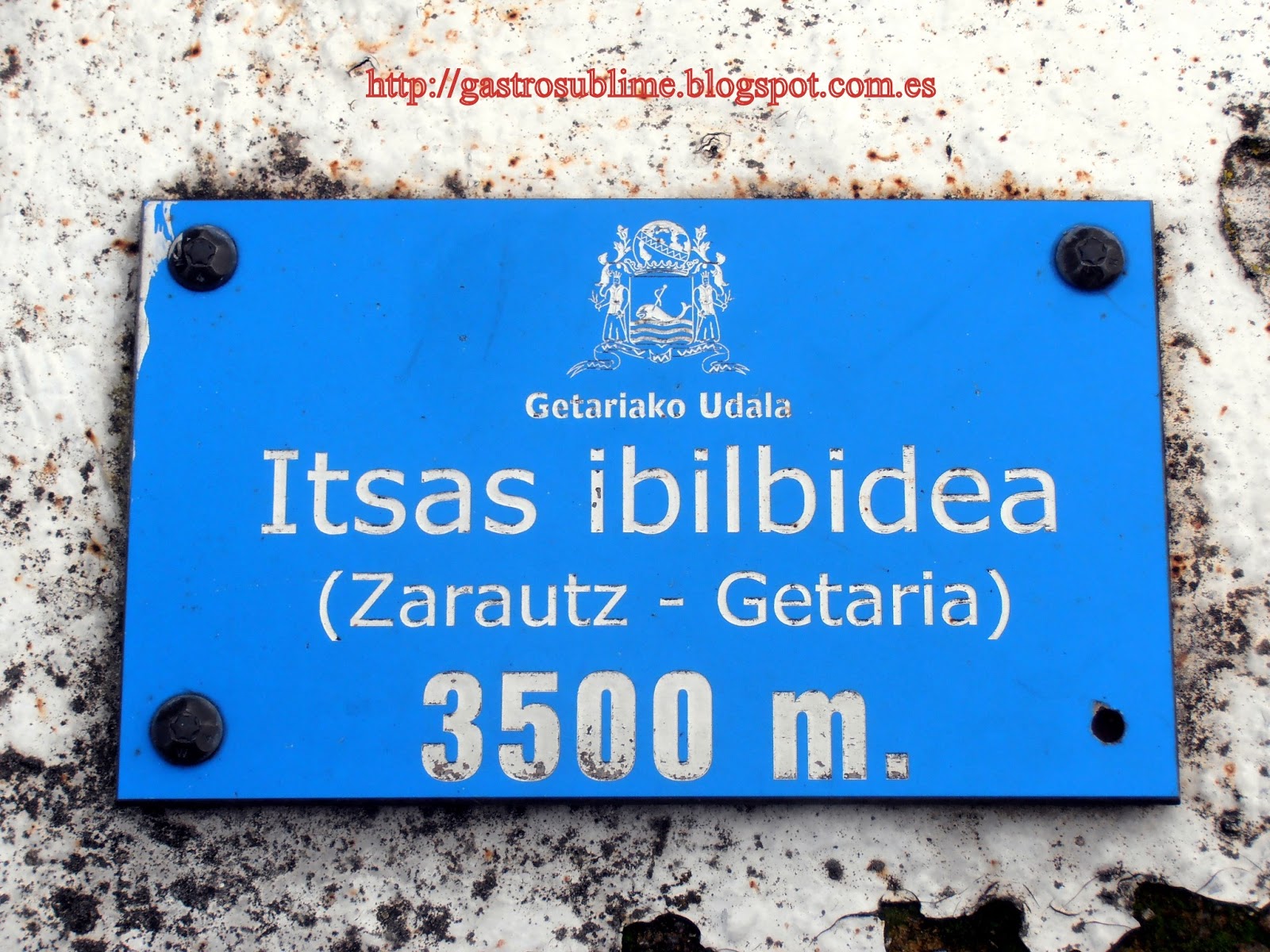
lugar, desplazaos hasta Zarauz de
buena mañana. Pasead por el centro si os apetece o id a la playa. A eso de las
once de la mañana dirigíos al paseo marítimo y recorredlo todo, disfrutando de
las vistas al mar, de los surfistas y de las casetas a rallas blanquiazules así
como de las esculturas marineras a lo largo del paseo en dirección Getaria. Cuando
lleguéis al final del paseo, os propongo seguir caminando hasta Getaria (3,5
km) en un ameno y agradable paseo recorriendo el mar.
Justo antes de llegar a Getaria hay unos bancos con unas vistas
impresionantes, en los que miras el camino que has dejado atrás y que invitan a
pensar y a conectar el alma con la tierra, porque en ese preciso instante sabes
que te llevas un trozo de esta región contigo, en tu recuerdo, para siempre.
Disfrutad de Getaria callejeando su casco antiguo, bajando al puerto, así como también visitando el Museo Balenciaga o comprando alimentos de calidad como anchoas o atún en conserva o incluso Txakolí. Cuando pase del mediodía, acercaos a la Taberna Politena. Pedios un Txakolí con unos pintxos para reponer fuerzas. De todos los que he probado a lo largo del tiempo, os recomiendo estos tres (de izquierda a derecha):
Pintxo de pastel de cabracho
Cucurucho de mousse de anchoa
Pintxo de jamón ibérico con hongos y gulas
En una palabra: ¡GastroSublimes!
Para bajar la comida, volved andando hacia Zarauz hasta llegar al Hotel
Restaurante de Karlos Arguiñano, muy recomendable para hacer una comida de
buen producto (al que dedicaré una entrada aparte más adelante).
ENGLISH
First of all, I would like
to say that it is a pleasure for me to start the Gastro Corner section
with this restaurant as it is an excellent establishment! I inaugurate this section to celebrate that this blog has received its first 500 visits! Thank you all!
One of the greatest
gastronomically pleasures of the Spanish cuisine scenario are pintxos and tapas and, to eat the best pintxos, you must go to the Basque
Country. In nowhere else, pintxos taste better than there! Guipúzcoa and, more
concretely, San Sebastian (or Donosti
as San Sebastian’s inhabitants call the city) and the villages nearby, are my
favourite spot in Spain. Moreover, if you visit this area, you can’t miss a
small viallage called Getaria, which
is barely about 15-20 minutes far driving from Donosti.
Getaria is a typical fishing
village of the Cantabrian coast. It is quite touristy (everytime more) but
unlike other places, it preserves its natural appeal. Its two most well-known neighbours
have been the sailor (who participated in the first world circumnavigation) Juan Sebastián Elcano and the couturier Cristóbal Balenciaga.
Apart from its history, its
natural surroundings, its old town, its three beautiful beaches and its views,
Getaria’s main highlight is gastronomy. On the one hand, it is a place that has
the certificate of origin of Txakolí (a white variety of wine that is excellent
combined with pintxos, fish, salads or pasta). On the other, it has a great
fishing tradition, that is why all restaurants nearby are supplied with
unquestionable excellent sea products.
To be honest, any of the restaurants in Getaria
would be a good recommendation (most of them curiously grill fish outdoors in
fish-shaped grills. It is said that when a fish is fresh, it needs few cookings
because its flavour is enough.
Getaria is a perfect spot
to stop and eat. What is more, in my point of view, you won’t find better
pintxos at any other restaurant in San Sebastian or in Getaria than in Politena Tavern. I find this an
authentic quality-product basque tavern.
This lively bar-restaurant
it is set in the main comercial street of Getaria. Since I discovered Donosti,
I visit it once a year. Every time I go there, I try doing new or
different things. However,
what I always repeat is visiting Getaria and eating pintxos in Politena Tavern.
From all the times I’ve been to Getaria, the best gastronomy route is the one I
suggest hereinafter:
First,
drive to Zarauz early in the morning
(you can also take a train or a bus). Walk and enjoy of the centre of the city
or go to the beach. At about eleven o’clock, go to the seafront esplanade and
enjoy of a pleasant walking, of the sea sights, of the surfers, of the blue and
white striped surfing tents as well as of the marine sculptures all along the
promenade. When you arrive to the end of the seafront, continue walking for 3.5
km in a pleasant and animated sea-sights way to Getaria.
Just before arriving to
Getaria, there are some seats with amazing views, from where you can observe
the way went over, that invite you to think and to connect your soul with this
land, because in that concrete moment you realize that you take part of this
region deep inside you, forever in your memory.
Enjoy of Getaria wandering
in the old town, descending to the harbour, visiting the Balenciaga Museum or
buying some quality food items such as tuna, anchovies or Txakolí. From midday
on, go to the Politena Tavern and
have a Txakolí and some pintxos. The best pintxos I have tasted there are the
following ones (from left to right):
·Scorpionfish cake Pintxo
·Anchovy mousse cream cornet
·Iberic
ham Pintxo with mushrooms and imitation Young eel
In a word: GastroSublimes!
To burn them, walk back to Zarauz until the Karlos Arguiñano’s Hotel-Restaurant (I really suggest this place to
have an excellent meal made of high-quality products). In the future I will
dedicate a whole blog entry to this restaurant showing you what I ate.
Esta mañana
me apetecía hacer un pastel. He abierto la nevera y he visto que tenía muchas
zanahorias. Es entonces cuando he decidido hacer un bizcocho de zanahoria (simple
pero resuelto perfectamente). Este bizcocho puede ser la base para múltiples
posibilidades posteriores (cubierto con nata, espolvoreado con azúcar glas,
relleno de mermelada o de crema…). Propiedades de la zanahoria
RECETA
Raciones:
8
Dificultad:
fácil-media
Tiempo:
45 minutos
INGREDIENTES
·400g de zanahoria ralladada
·300g de harina para repostería
·300g de azúcar blanco
·4 huevos medianos
·1 sobre de levadura
·Un vasito de aceite de girasol
·Una pizca de sal
PASOS
1.Pelamos y picamos muy fino o rallamos las zanahorias.
2.Ponemos a calentar el horno a 200º centígrados.
3.Untamos un molde de 26 cm de diámetro con aceite o mantequilla fundida y
espolvoreamos un poco de harina.
4.En un bol grande, batimos los huevos con el azúcar tamizado.
5.Agregamos un vasito de aceite de girasol y batimos de nuevo.
6.Tamizamos conjuntamente la harina de repostería y la levadura con una pizca
de sal y volvemos a batir.
7.Añadimos la zanahoria y batimos de nuevo hasta que vemos que la masa no se
nos pega.
8.Vertimos la mezcla en el molde.
9.Introducimos el molde en el horno y lo dejamos 30 minutos a 180ºC.
10.Desmoldamos y dejamos enfriar a temperatura ambiente.
¡Espero
que os guste!
ENGLISH
This morning I felt like cooking a cake. I opened the
fridge and I saw that I had plenty of carrots. That’s why I decided to prepare
a carrot sponge cake (simple but perfect
in execution). This cake can be an idoneous base for multiple possiblilites
(covered with cream, sparkled with icing sugar, filled with jam or pastry cream…).